
February 2026 · 4 min read
Life Along the Nduruma River: Farming Traditions, Irrigation Streams, and the Green Heart of Mtoni River Lodge
Where the Nduruma River branches into quiet irrigation streams, ox-ploughed fields, banana groves, and river-fed gardens shape the green sanctuary around Mtoni.
Along the lower slopes where the Nduruma River begins to branch into quiet, flowing streams, life unfolds at a rhythm shaped long before modern infrastructure arrived. This is the landscape where Mtoni River Lodge is rooted — a place defined not just by its architecture, but by the agricultural heartbeat of its surrounding community.
A living farming heritage along the river
In the villages surrounding Mtoni, small-scale farming in Arusha remains deeply connected to water drawn from natural irrigation channels fed by the Nduruma River. These streams are not engineered in modern complexity — they follow inherited paths carved over generations, guiding water gently into cultivated fields.
Here, farming is still guided by traditional agricultural practices. Before planting begins, farmers prepare the land using oxen, turning the soil in slow, deliberate motion. It is a method that reflects patience rather than speed, tradition rather than efficiency. Seeds are sown into earth that has been worked by hand, hoof, and time itself. This rhythm is not a memory of the past — it is the present reality of the land.
Oxen, soil, and seasonal wisdom
The use of oxen for ploughing remains a defining feature of subsistence farming in rural Tanzania. It is a practice that connects families to ancestral knowledge systems, where land preparation follows seasonal cues rather than mechanical schedules. Farmers read the land through experience — knowing when the soil is ready, when the rains will sustain growth, and when the river-fed streams are strong enough to nourish young crops. This relationship between people and land creates a farming system that is both fragile and enduring — shaped by respect rather than control.
The river that sustains Mtoni
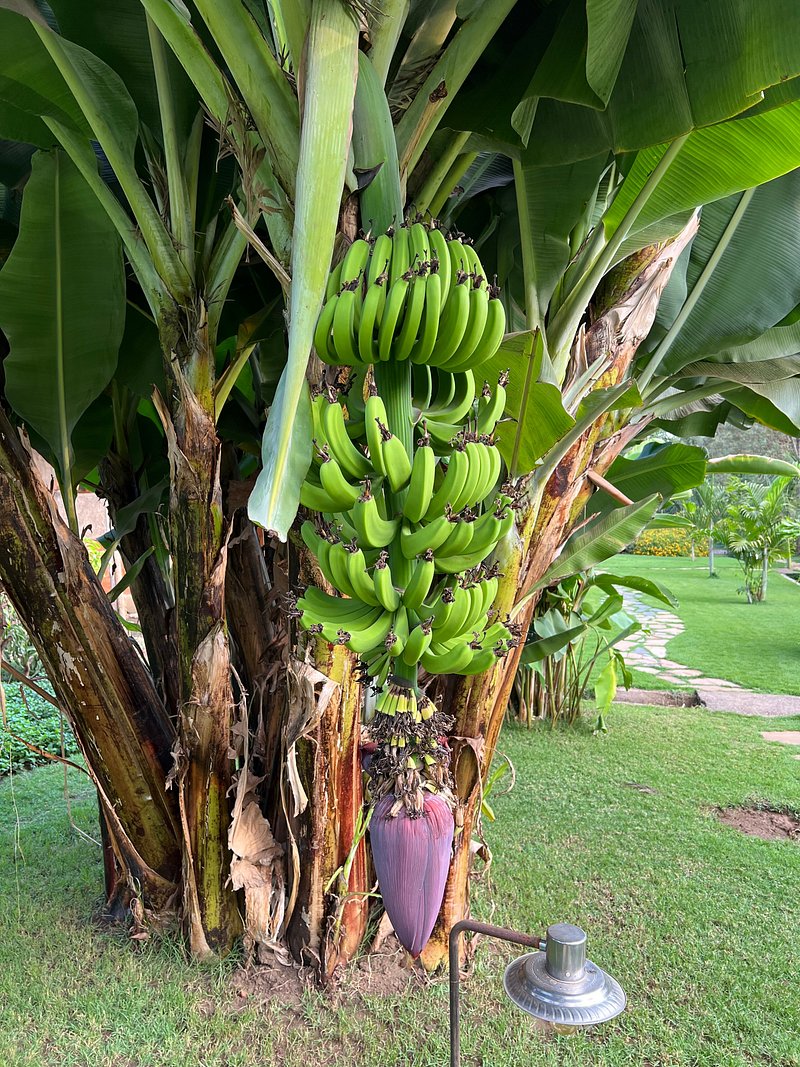
At Mtoni River Lodge, this same water system becomes part of daily life. The lodge benefits directly from the Nduruma River ecosystem and its irrigation streams, which nourish its surrounding greenery. The result is a naturally thriving environment where vegetation grows without artificial intensity — guided instead by consistent flow and fertile soil. Within the grounds, fresh vegetables are cultivated for seasonal cuisine, banana trees grow in abundance, and indigenous plants flourish in harmony with the river-fed soil. It is, quietly, an authentic farm-to-table experience in Arusha.
A landscape defined by green continuity
The presence of the river system transforms the entire environment into a naturally green sanctuary. Unlike arid or controlled landscapes, this region carries a softness — a continuous layer of vegetation shaped by water movement rather than design intervention. It is this river effect that gives Mtoni its character: lush surroundings throughout the seasons, natural shade and cooling from riparian vegetation, and a sense of immersion in a living landscape rather than constructed scenery. This is not landscaping. It is ecology at work.
Where community and sanctuary meet
Mtoni River Lodge exists within a shared ecosystem — one where local farming traditions, river systems, and hospitality intersect naturally. The lodge does not stand apart from the land. It participates in it. From the ox-ploughed fields of nearby farmers to the banana groves within the lodge grounds, the connection is continuous. Water flows through fields, through gardens, through kitchens — linking community life and guest experience in one uninterrupted system.
The Nduruma River does more than sustain agriculture. It sustains a way of life — visible in every green surface, every cultivated garden, and every plate served with ingredients grown nearby.